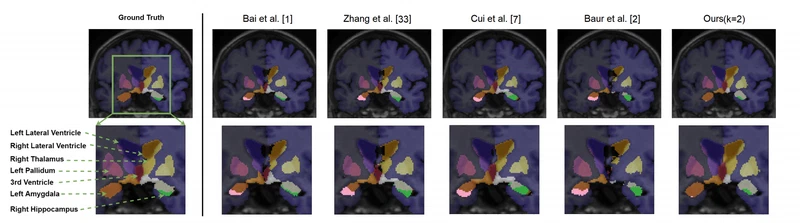
Computational neuroradiology brings AI to imaging of the brain and head, where findings are often subtle, diverse and time-critical.
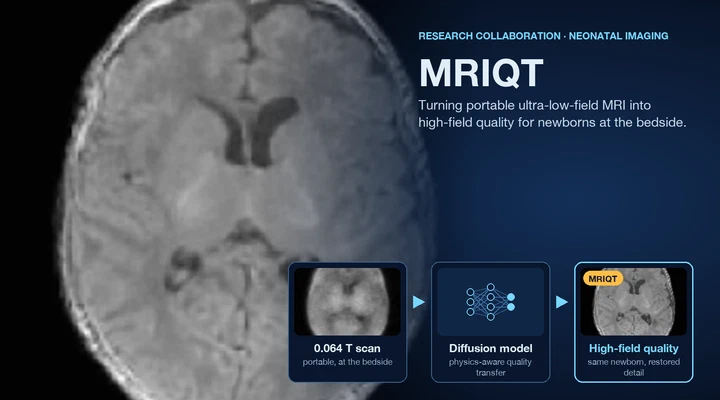
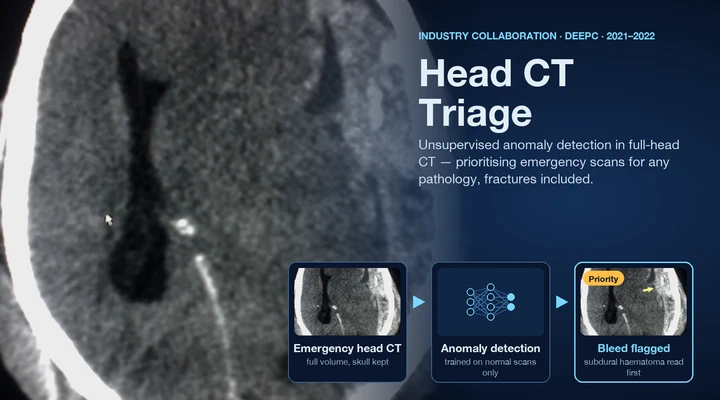
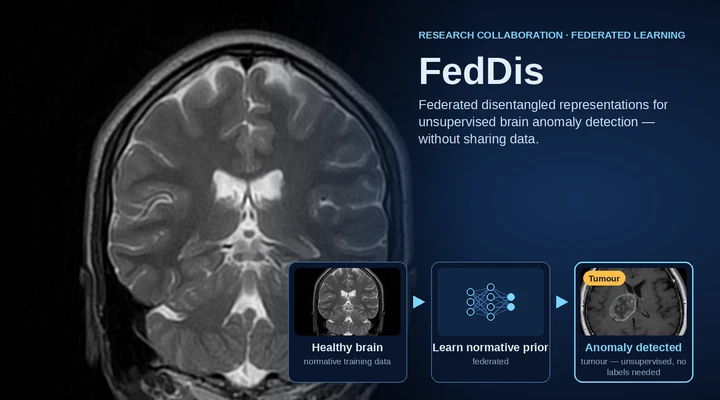
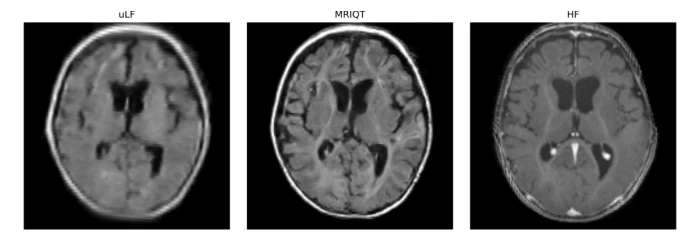
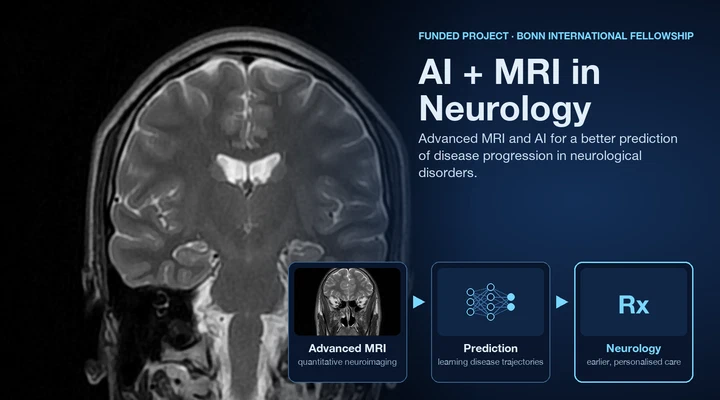
A long line of our work is unsupervised anomaly detection: models trained only on healthy brain MRI or head CT flag anything that deviates, from tumours and multiple sclerosis lesions to bleeds. With deepc we applied this to full-head CT for emergency triage, FedDis learns disentangled representations for brain anomaly detection across hospitals with federated learning, and we showed where such detectors fail on out-of-distribution data. In MRIQT, with the neonatology team at the University Hospital Bonn, a 3D diffusion model transfers image quality from portable ultra-low-field (0.064 T) neonatal MRI to high-field quality while preserving pathology. The Bonn fellowship project combines advanced MRI and AI to predict disease progression in neurology.
We focus on methods that need few annotations, quantify their uncertainty and generalise across scanners.
 active