Beyond medicine, our computer vision research addresses geometry and uncertainty in real-world scenes, and a small number of transdisciplinary projects take the methods we develop for medical imaging into other fields. These projects broaden our own knowledge — new data, new questions, new ways of validating models — and often feed ideas back into our medical work.
Pose, geometry and uncertainty
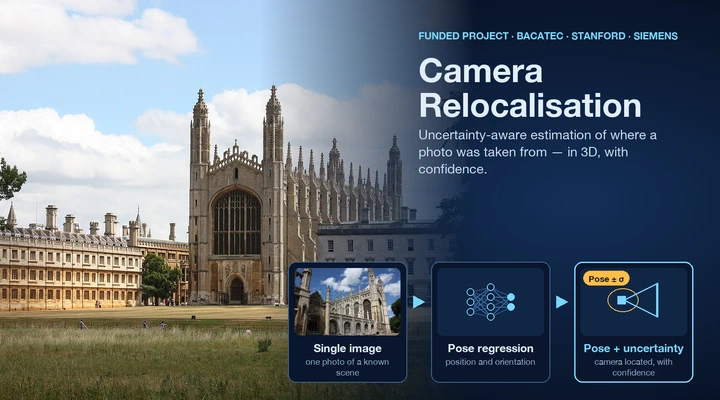
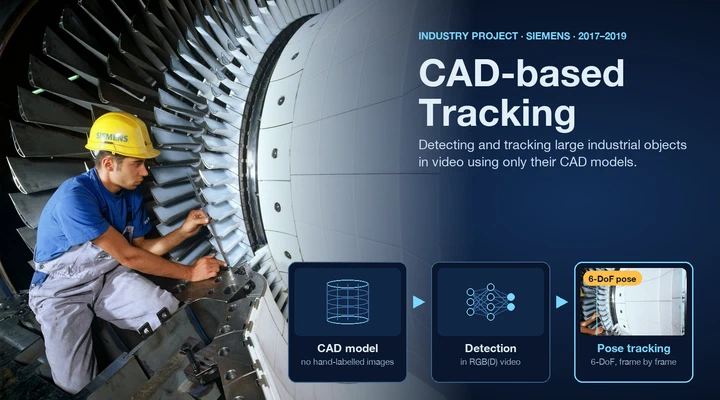
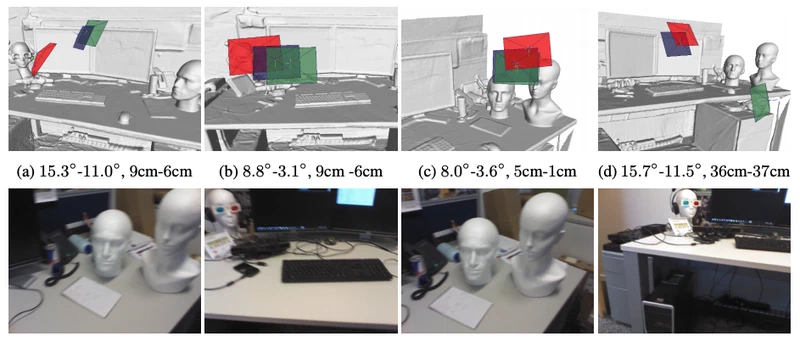
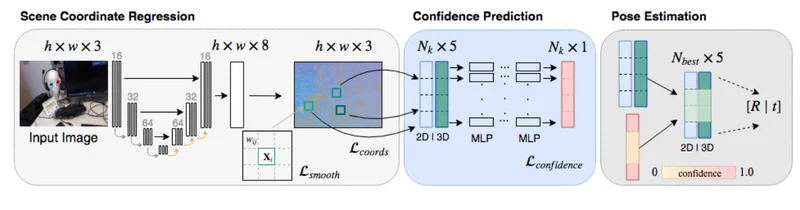
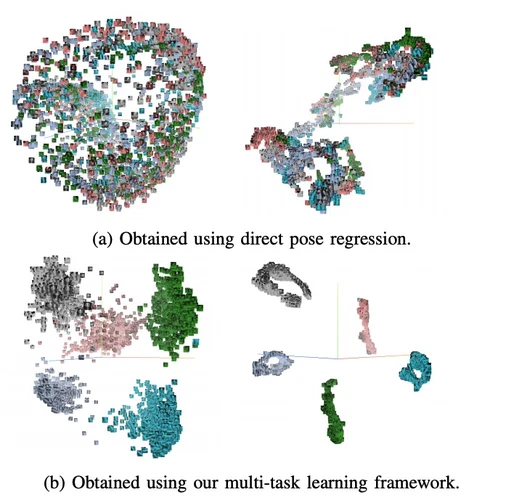
With Siemens we learned CAD model-based pose estimation of large industrial objects and of the cameras and mobile X-ray devices that observe them (X-ray PoseNet, multi-task pose estimation from depth images), as well as image-based camera relocalisation. In the BaCaTeC project with Stanford University we moved from single answers to full distributions over 6D camera poses in ambiguous scenes (ECCV 2020). Knowing when a scene is ambiguous is the same question we ask of clinical AI: when should a model not be trusted?
Transdisciplinary AI
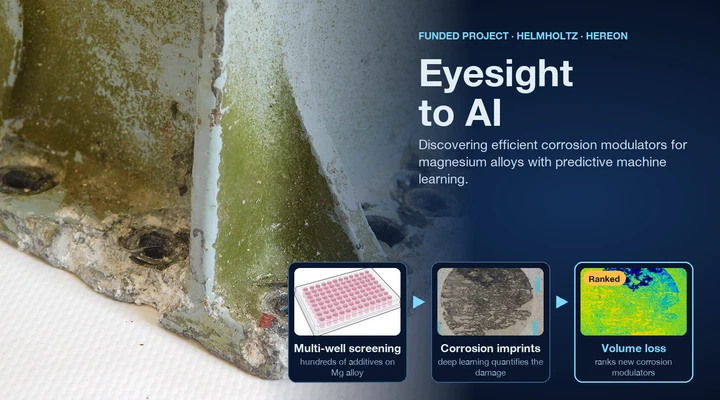
- Materials science — Eyesight to AI. Machine learning on corrosion imprints from high-throughput screening to discover efficient corrosion modulators, turning images of corroded surfaces into quantitative volume-loss maps.
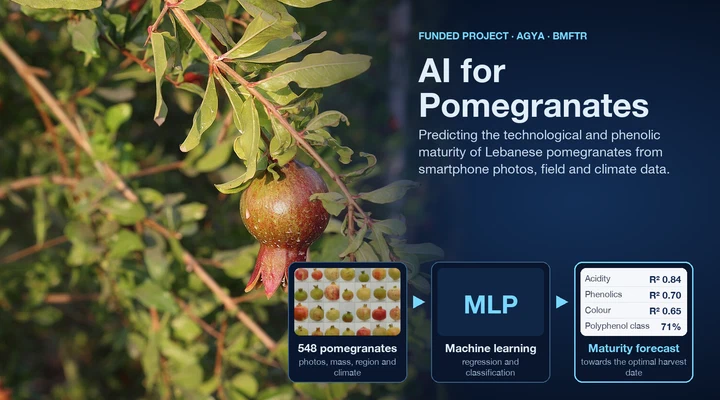
- Food science — Pomegranate AI. With Beirut Arab University, within the Arab-German Young Academy (AGYA), we predicted the technological and phenolic maturity of Lebanese pomegranates from smartphone photographs, field and climate data, to support region-specific harvest decisions (Scientific Reports 2025).
These collaborations reflect our engagement in the University of Bonn’s Transdisciplinary Research Areas (TRAs) — in particular Modelling, Life & Health and Sustainable Futures — and the interdisciplinary spirit of the academies we belong to, such as AGYA. They were not carried out under the umbrella of the TRAs themselves, but they share their aim: bringing data-driven modelling to questions that no single discipline can answer alone.
 completed