Speaker biography
Prof. Dr. Shadi Albarqouni
Professor of Computational Medical Imaging Research, Faculty of Medicine, University Hospital Bonn, University of Bonn
shadi.albarqouni@ukbonn.de · albarqouni.github.io · ORCID 0000-0003-2157-2211 · Google Scholar
- 20,826
- citations
- 45
- h-index
- 170
- publications
- 4.73
- FWCI (Scopus)
- ~2.5 M€
- funding acquired
Short biography · 83 words
Shadi Albarqouni is Professor of Computational Medical Imaging Research at the University Hospital Bonn and the University of Bonn, Germany, where he leads the Albarqouni Lab. His research develops trustworthy, privacy-preserving and affordable AI for medical imaging, from federated learning across hospitals to medical foundation models. He has published more than 170 peer-reviewed papers, cited over 20,000 times, and is Associate Editor of IEEE Transactions on Medical Imaging. He is a member of ELLIS, the Global Young Academy and the Arab-German Young Academy.
Long biography · 272 words
Shadi Albarqouni is a Palestinian-German computer scientist and Professor of Computational Medical Imaging Research at the Faculty of Medicine, University Hospital Bonn (UKB), and the University of Bonn, Germany, where he leads the Albarqouni Lab. His work asks how every patient can benefit from expert-level imaging diagnostics, also where data, compute and specialists are scarce.
After a BSc and MSc in Electrical Engineering at the Islamic University of Gaza, where he brought telemedicine to Palestinian hospitals, he earned his PhD in Computer Science summa cum laude at the Technical University of Munich (2017) with a DAAD scholarship. He was a DAAD PRIME Fellow at ETH Zurich and Imperial College London and led a Helmholtz AI Young Investigator Group at Helmholtz Munich before joining Bonn in 2022.
His lab develops trustworthy and affordable AI for medical imaging: medical foundation and vision–language models, federated learning that lets hospitals train models together without sharing patient data, and robust, fair and uncertainty-aware methods, translated with clinicians into radiology, pathology, ophthalmology and point-of-care imaging. He is scientific lead of Germany's Open Medical Inference network and co-author of the international FUTURE-AI guideline. He has published more than 170 peer-reviewed papers, cited over 20,000 times (h-index 45).
He is Associate Editor of IEEE Transactions on Medical Imaging, served MICCAI as Challenges Co-Chair (2024) and Workshop Chair (2026), and evaluates proposals for the European Commission and the DFG. An elected member of ELLIS, the Global Young Academy and the Arab-German Young Academy and a Steering Committee member of the German Alliance for Global Health Research (GLOHRA), he leads capacity-building networks that have trained 250+ researchers and students from 20+ countries.
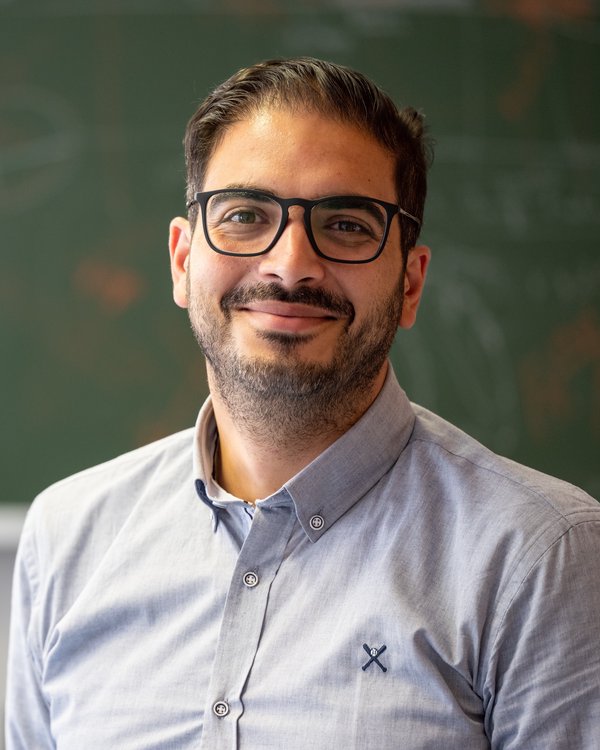
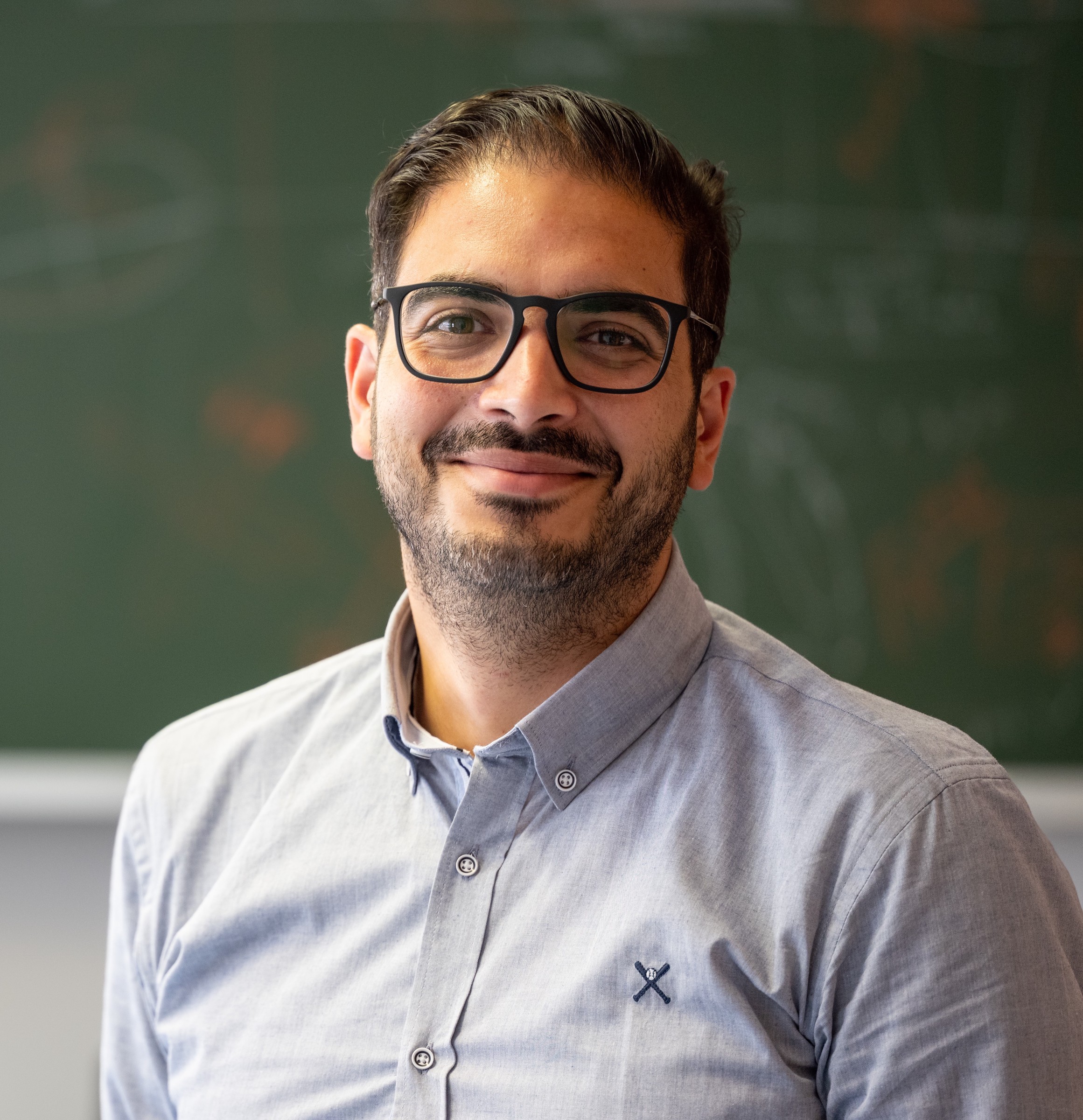
Numbers are updated automatically from the lab website. Photo: © Universitätsklinikum Bonn (UKB). Please credit the photo when you use it.