Horizon Europe & European partnerships
Partner with us in Horizon Europe
Trustworthy, privacy-preserving AI for medical imaging across borders: federated learning that works under the European Health Data Space, from university hospitals to low-resource settings.
Planning a consortium for Horizon Europe or a European partnership? We bring privacy-preserving, trustworthy and affordable AI for medical imaging, clinical data access at the University Hospital Bonn, and a broad international network.
Where we fit in EU priorities
European Health Data Space
Federated learning lets hospitals train and validate AI on their data without moving it, matching the secondary use of health data under the EHDS.
Trustworthy AI and the AI Act
We co-authored the FUTURE-AI international guideline (BMJ 2025) and evaluate models for robustness, uncertainty, fairness and bias.
Global health and Global Gateway
Affordable AI for point-of-care and low-resource imaging, with partner networks in the Middle East, North Africa and beyond.
What we bring to a consortium
Federated learning infrastructure & WP leadership
Design and operation of privacy-preserving training and inference across hospitals, including the national Open Medical Inference (OMI) network, where we are scientific lead.
Medical foundation & vision–language models
Foundation models for radiology, pathology and ophthalmology, adapted to new hospitals, devices and populations.
Trustworthy-AI evaluation
Multi-centre validation, robustness, uncertainty, fairness and bias auditing, following the FUTURE-AI guideline we co-authored.
Training & capacity building
Summer and autumn schools, online courses and researcher exchanges (EEDA, SANAD, BILD, SAAI, MISTAI) that build AI skills where they are needed most.
Partnerships and calls we target
| ERA4Health ↗ | Joint transnational calls on AI in clinical research — partner or coordinator for imaging AI. |
| European Partnership for Personalised Medicine (EP PerMed) ↗ | AI for patient stratification and prognosis from imaging (cancer, multiple sclerosis, vascular disease). |
| Transforming Health and Care Systems (THCS) ↗ | Implementing and evaluating AI and federated infrastructure in hospital workflows. |
| Innovative Health Initiative (IHI) ↗ | Public–private projects with industry; builds on our IMI project BigPicture. |
| Global Health EDCTP3 ↗ | Affordable, point-of-care imaging AI with partners in Africa and the Middle East. |
| Horizon Europe Cluster 1 Health, Cancer Mission & GenAI4EU | Work-package lead for federated learning and medical foundation models. Cluster 1 Health ↗EU Mission on Cancer ↗GenAI4EU ↗ |
| COST Actions & MSCA Doctoral Networks | Networks and doctoral training on federated and affordable medical AI. COST ↗MSCA Doctoral Networks ↗ |
Track record in funded projects
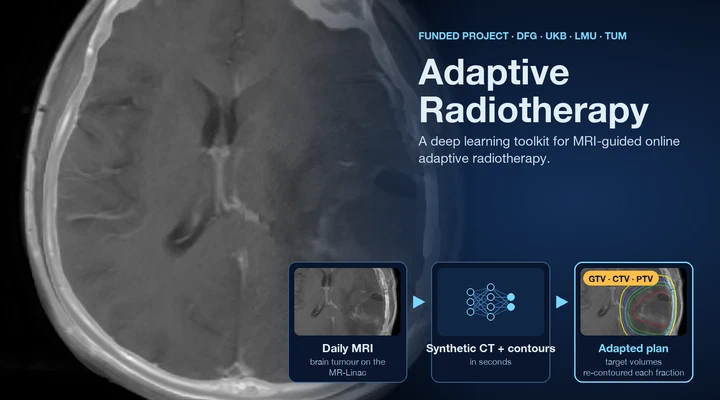 active
Funded · 2022 – 2026
Development of a Deep Learning Toolkit for MRI-Guided Online Adaptive Radiotherapy
The 3-year DFG Funded project with the University Hospital Bonn, LMU and TU Munich (2022-2025)








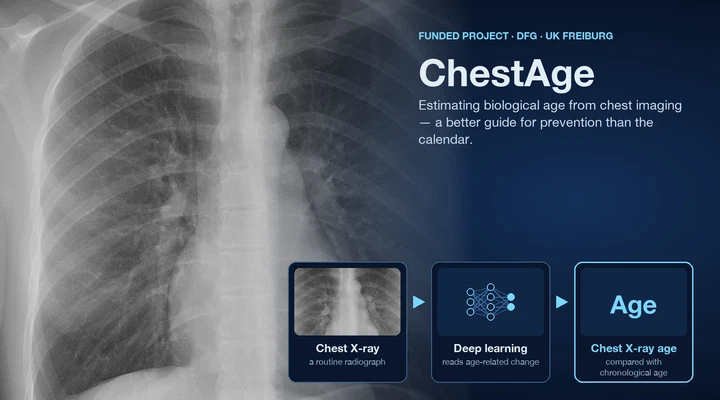 active
Funded · 2023 – 2026
Deep learning to estimate aging from chest imaging
The 3-year DFG Funded project with UniKlinikum Freiburg (2023-2026)
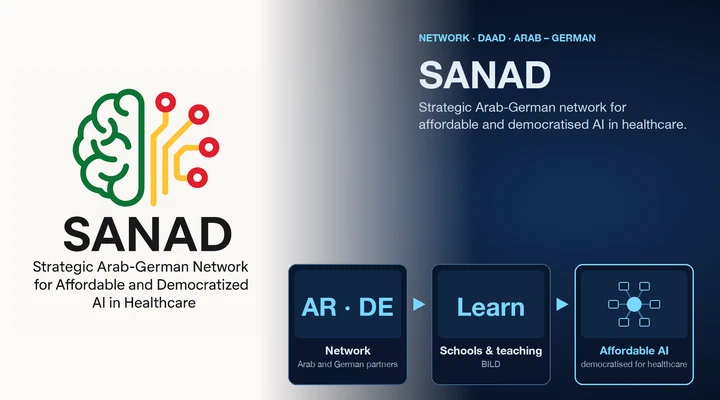 completed
Funded · 2025 · SANAD
Strategic Arab-German Network for Affordable and Democratized AI (SANAD)
DAAD Funded Project (2025-2025)




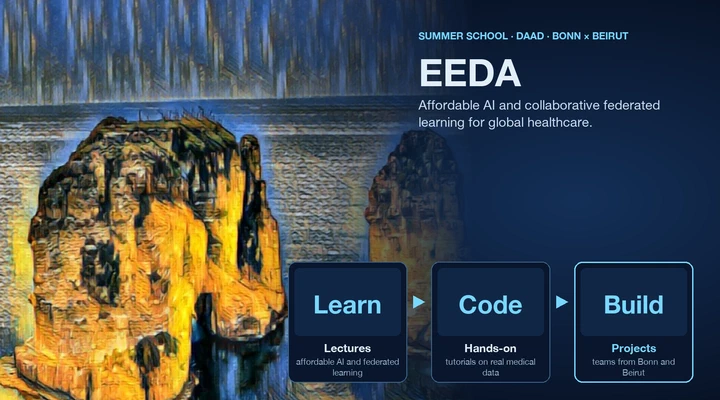 completed
Funded · 2023 · EEDA
Affordable AI and Collaborative Federated Learning for Global Healthcare (EEDA)
DAAD Funded Project with Beirut Arab University, Lebanon (2023-2023)
 completed
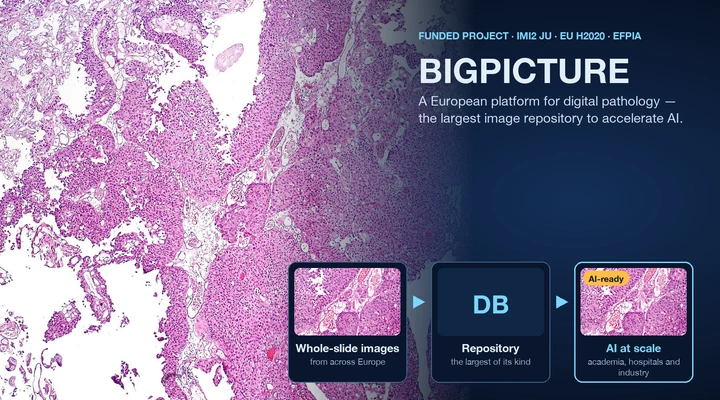
Funded · 2020 · BIGPICTURE
BigPicture Project
European IMI2 consortium building the largest platform of digital pathology images for AI (2021–2027). We took part at TU Munich, contributing federated …



Policy impact
Our work is cited in policy documents of the OECD, the World Health Organization, the European Union and others:
- Navigating the global politics of artificial intelligence and healthcare
- ERC frontier research for artificial intelligence in health
- Safe and Sustainable Development of AI tools for German Primary Care
- AI evidence pathway for operationalising trustworthy AI in health
- OECD Artificial Intelligence Review of Germany
- OECD-Bericht zu Künstlicher Intelligenz in Deutschland
- Artificial Intelligence in Science
- Using Artificial Intelligence to Generate Synthetic Health Data (working paper WR-A2892-1)
- Artificial intelligence in healthcare
- Ethics and governance of artificial intelligence for health: WHO guidance
- Ethics and governance of AI for health: consultation meeting report (Geneva, 2–4 October 2019)
Expert roles
- Grant Evaluator · European Commission — Horizon Europe
- Grant Reviewer · German Research Foundation (DFG)
- Grant Reviewer · Federal Ministry of Research, Technology and Space (BMFTR)
- Grant Reviewer · German Academic Exchange Service (DAAD)
- Grant Reviewer · Swiss National Science Foundation (SNSF)
- Associate Editor · IEEE Transactions on Medical Imaging
- Associate Editor · ACM Transactions on Intelligent Systems and Technology (TIST)
- Editorial Board Member · International Journal of Computer Vision (IJCV)
- Workshop Chair · MICCAI 2026, Strasbourg
- Technical Program Committee Chair (since 2024) · MICAD 2024 Manchester · 2025 London · 2026 Edinburgh
- Co-organiser & Session Chair · FLUID workshop @ AAAI 2025, Philadelphia
- Organizing Committee (Outreach) · MICCAI 2025, Daejeon
- Challenges Co-Chair · MICCAI 2024, Marrakesh
- Program Co-Chair · MIDL 2022, Zurich
- Special Sessions Chair · IEEE ISBI 2022, Kolkata
- Organising Committee · DART 2020 and DCL 2020 @ MICCAI
- Organising Committee · DART 2019 and COMPAY 2019 @ MICCAI
Infrastructure and resources
- Lab GPU server at Bonn: 8× NVIDIA A100 (64 GB), plus access to university and national HPC resources.
- Open Medical Inference (OMI) network: national infrastructure of the Medical Informatics Initiative (BMFTR) for privacy-preserving AI training and inference across 16 partner sites in 4 MII consortia; our role: scientific lead. Details: albarqouni.github.io/projects/omi.
- CoMI AI marketplace (internal) with 12 AI services.
- Clinical imaging (CT, MRI, X-ray, ultrasound) and digital pathology at UKB, including high-resolution whole-slide scanners.
- Open resources: curated datasets, open-source code and benchmarks published by the lab — datasets, code, github.com/albarqounilab.
Partner description for your proposal
Universitätsklinikum Bonn (University Hospital Bonn, UKB), Germany
Clinic for Diagnostic and Interventional Radiology — Computational Medical Imaging Research (Albarqouni Lab)

The University Hospital Bonn is one of Germany's leading university hospitals, combining patient care, research and teaching with the Faculty of Medicine of the University of Bonn, a German University of Excellence. The Albarqouni Lab at the Clinic for Diagnostic and Interventional Radiology develops trustworthy and affordable AI for medical imaging and translates it with clinical departments across UKB and with an international network of hospitals and universities.

Role in the project (examples):
- Development of medical foundation and vision–language models for radiology, pathology and ophthalmology
- Federated and privacy-preserving learning across hospitals, including multi-centre validation
- Robustness, uncertainty, fairness and bias auditing of AI models (FUTURE-AI guideline co-author)
- Affordable AI for low-resource and point-of-care settings, including portable and ultra-low-field imaging
- Clinical data access and annotation through UKB clinics, and training and capacity building (summer schools, MSc and PhD teaching)

Principal investigator: Prof. Dr. Shadi Albarqouni, Professor of Computational Medical Imaging Research, University Hospital Bonn / University of Bonn — shadi.albarqouni@ukbonn.de
Planning a consortium? Get in touch — we are happy to discuss roles, work packages and joint proposals.