Open until filled
CIR/01/2027: Ph.D. position in AI in Medicine: Foundation Models and Vision-Language Models (m/f/d)
Starting February 2027 (April 2027 at the latest). The position is initially limited to three years, with the possibility of extension.
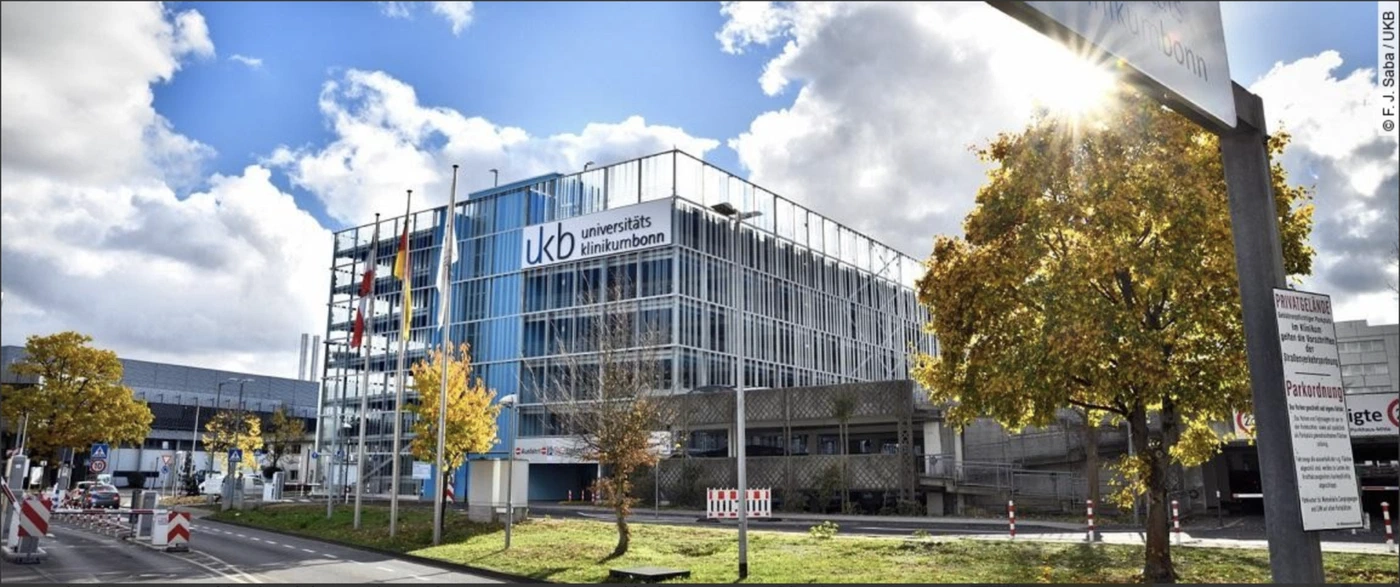
As one of Germany’s top-performing university hospitals, the University Hospital Bonn (UKB) combines outstanding achievements in medicine and research with excellent teaching. Every year, more than half a million patients receive outpatient and inpatient care at the UKB. Around 3,500 students study medicine and dentistry here, and more than 600 people are trained in the health professions each year. With around 9,900 employees, the UKB is the third-largest employer in the Bonn/Rhein-Sieg region. The UKB ranks first among the university hospitals in North Rhine-Westphalia in the Focus hospital list and has the second-highest case mix index (case severity) of all university hospitals in Germany. In 2024, the UKB raised almost €100 million in third-party funding for research, development and teaching. For the fourth year in a row, the F.A.Z. Institute has named the UKB “Germany’s Training Champion” and “Germany’s Most Sought-After Employer”.
The following (TV-L E13, 75%) Ph.D. position is available at the Computational Imaging Research (CIR) Lab (Albarqouni Lab), headed by Prof. Dr. Shadi Albarqouni, in the Clinic for Diagnostic and Interventional Radiology of the University Hospital Bonn, University of Bonn:
Ph.D. position in AI in Medicine: Foundation Models and Vision-Language Models (m/f/d)
starting February 2027 (April 2027 at the latest). The position is initially limited to three years, with the possibility of extension.
The lab develops trustworthy and affordable AI for medical imaging: medical foundation and vision-language models, federated learning that lets hospitals train models together without sharing patient data, and principled uncertainty, robustness and fairness. Together with clinicians at the UKB, we bring these methods into radiology, pathology, ophthalmology and point-of-care imaging; see our research areas.
This project uses foundation models (FMs) and vision-language models (VLMs) for medical imaging and computational phenotyping. You will develop methods that bring together medical images, clinical text such as radiology reports, and structured clinical data, to find clinically meaningful patient phenotypes in heterogeneous and partially annotated datasets. Topics include multimodal and vision-language representation learning, weakly supervised and label-efficient learning, grounding of model outputs in image evidence, and using FMs and VLMs for annotation support, report generation and knowledge transfer. Robustness, generalisation across hospitals, interpretability and regulatory requirements (such as the EU AI Act) are central to the work, so that the models can support patient stratification and precision medicine in real clinical settings.
You will be enrolled at the Faculty of Mathematics and Natural Sciences of the University of Bonn.
Your responsibilities:
- Build clinical use cases and benchmarks with our clinical partners, and run state-of-the-art foundation and vision-language models as baselines, including their pre- and post-processing pipelines
- Develop new methods for multimodal FMs and VLMs in medical imaging: adaptation with few labels, image–text alignment and grounding, robustness and explainability
- Publish and present your results at international conferences and in high-impact journals
- Work closely with the team and our clinical partners
Your qualifications:
- M.Sc. in Computer Science, Machine Learning, Electrical Engineering, Physics or equivalent, with an interest in medical imaging
- Strong knowledge of machine and deep learning, including transformers and representation learning
- Excellent programming skills in Python and PyTorch, including good software-engineering practice
- Excellent analytical, technical and problem-solving skills
- Highly motivated, a team player with excellent communication and presentation skills, including across disciplines
- Fluent English
Desirable qualifications:
- Experience with foundation models, vision-language models or large language models (e.g. CLIP-style pre-training, fine-tuning, parameter-efficient adaptation)
- Publications at top-tier conferences and journals, e.g. MICCAI, CVPR, NeurIPS, MIDL, IEEE TMI and MedIA
- Hands-on experience with the MONAI framework or Hugging Face
- Working in a Linux environment, with shell and cluster (SLURM) scripting
- German language skills
What we offer you:
- A secure future: remuneration according to the German salary scale TV-L (E13, 75%)
- Flexible for families: flexible working time, home office, on-site nursery and parental care
- Provisions for later: company pension scheme
- Discounted public transport ticket: discounted ticket for public transport (VRS)
- On-site health management service: numerous health promotion offers
- Employer benefits: discounted offers for employees
- Subsidised continuing education and training
Selection process:
- All applications are screened, and a shortlist is drawn up.
- The top-ranked shortlisted applicants are invited to an interview with the PI and members of the team. You give a short presentation on your background or a piece of research you find exciting, followed by technical and behavioural questions, with time for your own questions at the end.
- Selected candidates receive an offer by email and are then asked to send their documents to the UKB HR department.
How to apply: please apply only through the form below; we do not accept applications by email.
The University of Bonn is committed to diversity and equal opportunity and is certified as a family-friendly university. It aims to increase the proportion of women in areas where women are under-represented and to promote their careers in particular. Therefore, we strongly encourage applications from qualified women. Applications will be handled in accordance with the State Equality Act (Landesgleichstellungsgesetz). Applications from individuals with a certified severe disability and from those of equal status are particularly welcome.
Apply for this position
Please complete the form below. Your application is sent directly by email to the PI — it is not stored on this website or in any database. Share your CV and certificates as a link (e.g. Sciebo, Google Drive, Dropbox).