In radiation therapy (RT), an accurate delineation of the regions of interest (ROI) and organs at risk (OAR) allows for a more targeted irradiation with reduced side effects. The …
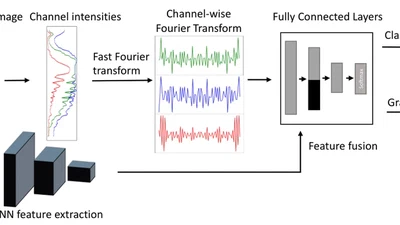
Retinal diseases are a significant global health concern, often leading to severe vision impairment or blindness if not diagnosed and treated promptly. Classifying inherited …
The quality of patient care associated with diagnostic radiology is proportionate to a physician’s workload. Segmentation is a fundamental limiting precursor to both diagnostic and …
Collecting large-scale medical datasets with fully annotated samples for training of deep networks is prohibitively expensive, especially for 3D volume data. Recent breakthroughs …
Generative adversarial networks (GANs) offer an effective solution to the image-to-image translation problem, thereby allowing for new possibilities in medical imaging. They can …
Deep unsupervised generative models are regarded as a promising alternative to supervised counterparts in the field of MRI-based lesion detection. They denote a principled approach …
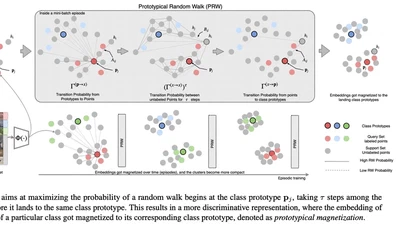
Recent progress has shown that few-shot learning can be improved with access to unlabelled data, known as semi-supervised few-shot learning(SS-FSL). We introduce an SS-FSL …
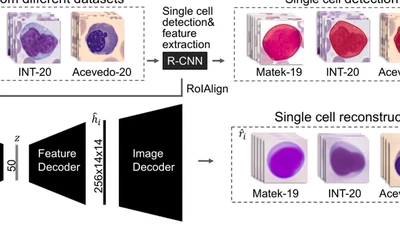
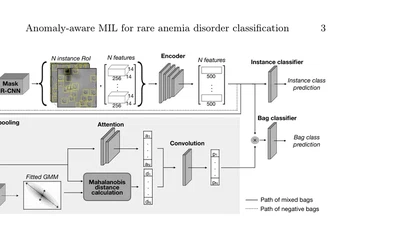
Hereditary hemolytic anemias are genetic disorders that affect the shape and density of red blood cells. Genetic tests currently used to diagnose such anemias are expensive and …
Privacy — With your consent we use Google Analytics to understand how our website is used (IP addresses anonymised).
You can change your choice at any time via “Cookie settings” in the footer. Privacy policy