Radiation therapy tries to maximize the effect of radiation on the tumor and minimize its influence on adjacent tissues. However, it highly depends on the accuracy of the tumor …
Recently, it has been shown that CycleGANs are masters of steganography. They cannot only learn reliable mappings between two distributions without calling for paired training …
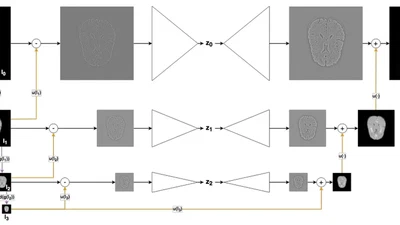
Brain pathologies can vary greatly in size and shape, ranging from few pixels (i.e. MS lesions) to large, space-occupying tumors. Recently proposed Autoencoder-based methods for …
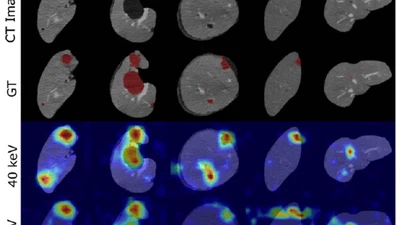
Dual Energy CT is a modern imaging technique that is utilized in clinical practice to acquire spectral information for various diagnostic purposes including the identification, …
Autoencoder-based approaches for Unsupervised Anomaly Detection (UAD) in brain MRI have recently gained a lot of attention and have shown promising performance. However, brain MR …
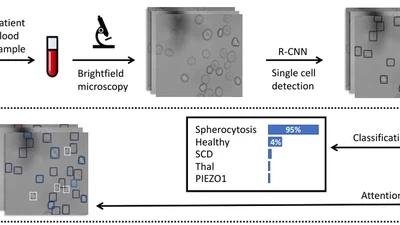
Red blood cells are highly deformable and present in various shapes. In blood cell disorders, only a subset of all cells is morphologically altered and relevant for the diagnosis. …
Histopathological evaluation of tissue samples is a key practice in patient diagnosis and drug development, especially in oncology. Historically, Hematoxylin and Eosin (H&E) has …
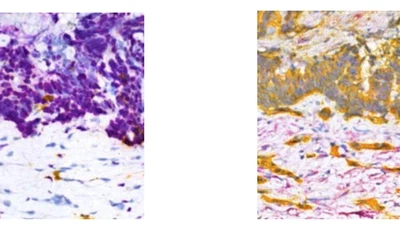
Digitized Histological diagnosis is in increasing demand. However, color variations due to various factors are imposing obstacles to the diagnosis process. The problem of stain …
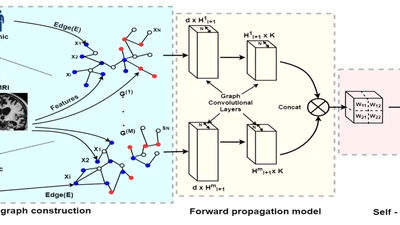
Multi-modal data comprising imaging (MRI, fMRI, PET, etc.) and non-imaging (clinical test, demographics, etc.) data can be collected together and used for disease prediction. Such …
Privacy — With your consent we use Google Analytics to understand how our website is used (IP addresses anonymised).
You can change your choice at any time via “Cookie settings” in the footer. Privacy policy