Journal
Q1IF 23.9
❝ 132 citations
Top 5% attention
Federated disentangled representation learning for unsupervised brain anomaly detection
Nature Machine Intelligence, October 2022
Altmetric · top 5% of all research outputs · 17 news outlets

Abstract
Recent advances in Deep Learning (DL) and the increased use of brain MRI have provided a great opportunity and interest in automated anomaly segmentation to support human interpretation and improve clinical workflow. However, medical imaging must be curated by trained clinicians, which is time-consuming and expensive. Further, data is often scattered across multiple institutions, with privacy regulations limiting its access. Here, we present FedDis (Federated Disentangled representation learning for unsupervised brain pathology segmentation) to collaboratively train an unsupervised deep convolutional neural network on 1532 healthy MR scans from four different institutions, and evaluate its performance in identifying abnormal brain MRIs including multiple sclerosis (MS), vascular lesions, low-grade tumors (LGG), and high-grade tumors/glioblastoma (HGG/GB) on a total of ~538 scans from 6 different institutions and datasets. To mitigate the statistical heterogeneity between the different institutes, we disentangle the parameter space into global, i.e., shape and local, i.e., appearance. We train the shape parameters jointly from four institutes to learn a global model of the healthy anatomical brain structure. The appearance parameters are trained locally on every institute and allow for personalization of the global domain-invariant features with client-specific information, such as scanner or acquisition parameter. We have shown that our collaborative approach, FedDis, improves anomaly segmentation results by 99.74% for MS, 83.33% for vascular lesions,and 40.45% for tumors over locally trained models without the need for annotations or sharing private local data. We found out that FedDis is especially beneficial for clients that share both healthy and anomaly data coming from the same institute, improving their local anomaly detection performance by up to 227% for MS lesions and 77% for brain tumors.
Interactive explainer
Auto-generated. This explainer was generated automatically with Claude (Anthropic) from the published paper. It simplifies the method and may contain errors — for a correct understanding, and for all results and numbers, please refer to the published paper (publisher version).
Research themes
Research areas
Keywords
Medical ImagingDeep LearningFederated Learning


Cite (BibTeX)
@article{bercea-2022-federated,
 abstract = {With the advent of deep learning and increasing use of brain MRIs, a great amount of interest has arisen in automated anomaly segmentation to improve clinical workflows; however, it is time-consuming and expensive to curate medical imaging. Moreover, data are often scattered across many institutions, with privacy regulations hampering its use. Here we present FedDis to collaboratively train an unsupervised deep convolutional autoencoder on 1,532 healthy magnetic resonance scans from four different institutions, and evaluate its performance in identifying pathologies such as multiple sclerosis, vascular lesions, and low- and high-grade tumours/glioblastoma on a total of 538 volumes from six different institutions. To mitigate the statistical heterogeneity among different institutions, we disentangle the parameter space into global (shape) and local (appearance). Four institutes jointly train shape parameters to model healthy brain anatomical structures. Every institute trains appearance parameters locally to allow for client-specific personalization of the global domain-invariant features. We have shown that our collaborative approach, FedDis, improves anomaly segmentation results by 99.74% for multiple sclerosis, 83.33% for vascular lesions and 40.45% for tumours over locally trained models without the need for annotations or sharing of private local data. We found out that FedDis is especially beneficial for institutes that share both healthy and anomaly data, improving their local model performance by up to 227% for multiple sclerosis lesions and 77% for brain tumours.},
 author = {Bercea, Cosmin I. and Wiestler, Benedikt and Rueckert, Daniel and Albarqouni, Shadi},
 bdsk-url-1 = {https://doi.org/10.1038/s42256-022-00515-2},
 date = {2022/08/01},
 date-added = {2022-12-23 00:13:24 +0100},
 date-modified = {2022-12-23 00:13:24 +0100},
 doi = {10.1038/s42256-022-00515-2},
 id = {Bercea2022},
 isbn = {2522-5839},
 journal = {Nature Machine Intelligence},
 number = {8},
 pages = {685--695},
 title = {Federated disentangled representation learning for unsupervised brain anomaly detection},
 url = {https://doi.org/10.1038/s42256-022-00515-2},
 volume = {4},
 year = {2022}
}
In the news
- Our Nature Machine Intelligence paper: 2nd in online attention among Nature Machine Intelligence articles of its age, covered by 19 news outlets
Our federated learning paper in Nature Machine Intelligence (Bercea et al., 2022) ranks 2nd in online attention among the 33 Nature Machine Intelligence articles of similar age and in the 98th percentile of all tracked articles of its age (Altmetric), with 19 news outlets reporting on it and over 5,400 article accesses. - News release on our Nature Machine Intelligence Paper by Healthcare in Europe (26.08.2022)
- Press release on our Nature Machine Intelligence Paper at UKBonn (26.08.2022)
- News release on our Nature Machine Intelligence Paper by Eurekalert (25.08.2022)
- MRT-Daten über Klinikgrenzen hinweg analysieren
- Effiziente KI-Technologie zur Analyse von MRT-Daten
- Effiziente KI-Technologie zur Analyse von MRT-Daten
- With federated learning, AI's sum is better than its parts
- AI tech for MRI analysis
- Efficient AI technology for MRI data analysis
- Efficient AI technology for MRI data analysis
- Efficient AI technology for MRI data analysis
- Effiziente KI-Technologie zur Analyse von MRT-Daten
- Effiziente KI-Technologie zur Analyse von MRT-Daten
Related publications
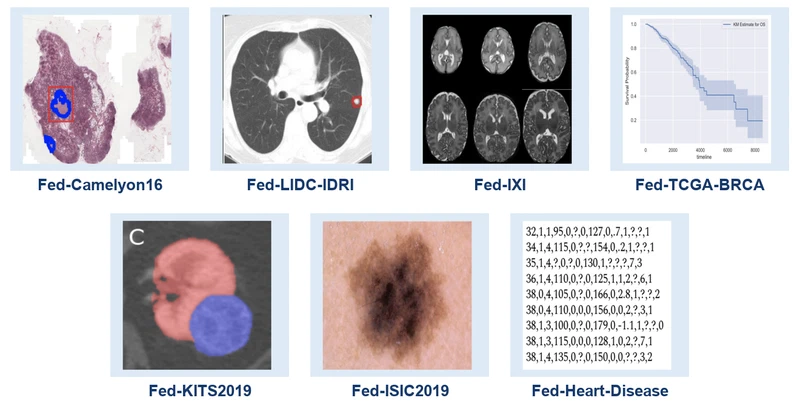
Flamby: Datasets and benchmarks for cross-silo federated learning in realistic healthcare settings
Advances in Neural Information Processing Systems, 2022
Conference
CORE A*25.7% acc.
❝ 288
PathologyRadiology
Deep Federated Learning in …FLamby: Federated learning …

What can we learn about a generated image corrupting its latent representation?
International Conference on Medical Image Computing and Computer-Assisted Intervention, 2022
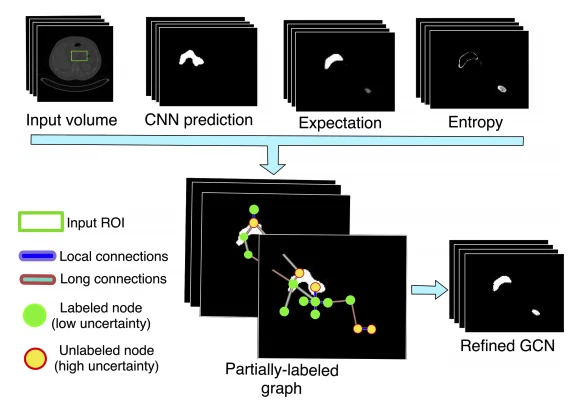
An Uncertainty-Driven GCN Refinement Strategy for Organ Segmentation
Journal of Machine Learning for Biomedical Imaging (MELBA) — Special Issue: MIDL 2020, 2020
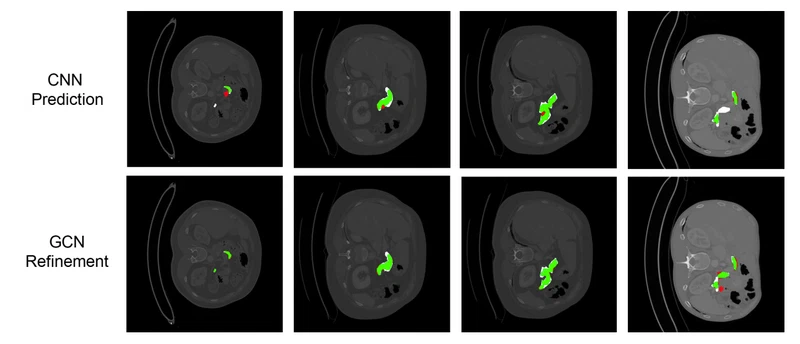
Uncertainty-based graph convolutional networks for organ segmentation refinement
To appear in the International Conference in Medical Imaging with Deep Learning, 2020, 2020