Journal
Q2
❝ citations
Preliminary results of DSA denoising based on a weighted low-rank approach using an advanced neurovascular replication system
International journal of computer assisted radiology and surgery, 2019
Abstract
2D digital subtraction angiography (DSA) has become an important technique for interventional neuroradiology tasks, such as detection and subsequent treatment of aneurysms. In order to provide high-quality DSA images, usually undiluted contrast agent and a high X-ray dose are used. The iodinated contrast agent puts a burden on the patients’ kidneys while the use of high-dose X-rays expose both patients and medical staff to a considerable amount of radiation. Unfortunately, reducing either the X-ray dose or the contrast agent concentration usually results in a sacrifice of image quality.To denoise a frame, the proposed spatiotemporal denoising method utilizes the low-rank nature of a spatially aligned temporal sequence where variation is introduced by the flow of contrast agent through a vessel tree of interest. That is, a constrained weighted rank-1 approximation of the stack …
Interactive explainer
Coming soon. An interactive Slidev walkthrough of this paper — with live, explorable figures — will appear here.
Authors: set
slidev: in this page's front matter to the deployed deck URL.Research themes
Keywords
Radiology
Lab authors


Cite (BibTeX)
@article{hariharan2019preliminary,
 author = {Hariharan, Sai Gokul and Kaethner, Christian and Strobel, Norbert and Kowarschik, Markus and DiNitto, Julie and Albarqouni, Shadi and Fahrig, Rebecca and Navab, Nassir},
 journal = {International journal of computer assisted radiology and surgery},
 number = {7},
 pages = {1117--1126},
 publisher = {Springer International Publishing},
 title = {Preliminary results of DSA denoising based on a weighted low-rank approach using an advanced neurovascular replication system},
 volume = {14},
 year = {2019}
}
Related publications
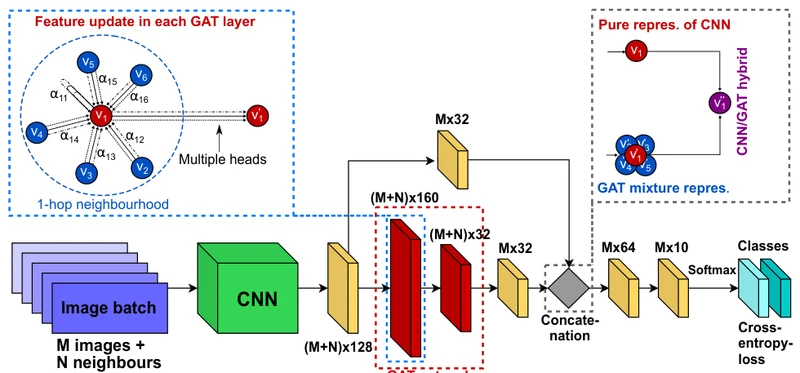
Adaptive image-feature learning for disease classification using inductive graph networks
Medical Image Computing and Computer Assisted Intervention – MICCAI 2019, Lecture Notes in Computer Science, 2019
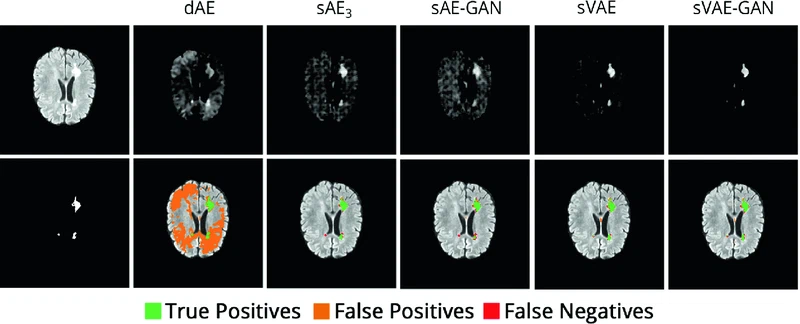
Deep autoencoding models for unsupervised anomaly segmentation in brain MR images
Brainlesion: Glioma, Multiple Sclerosis, Stroke and Traumatic Brain Injuries — BrainLes 2018 workshop @ MICCAI, Lecture Notes in Computer Science, 2019

Graph Convolution Based Attention Model for Personalized Disease Prediction
International Conference on Medical Image Computing and Computer-Assisted Intervention, 2019
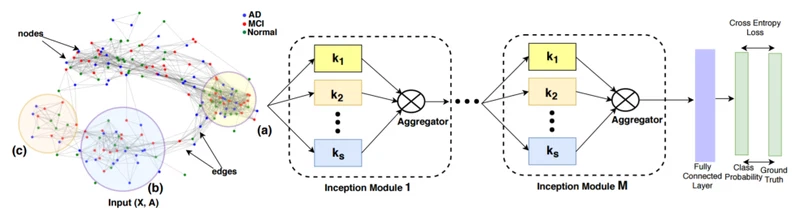
InceptionGCN: receptive field aware graph convolutional network for disease prediction
International Conference on Information Processing in Medical Imaging, 2019