Affordable deep learning for inherited and common retinal diseases
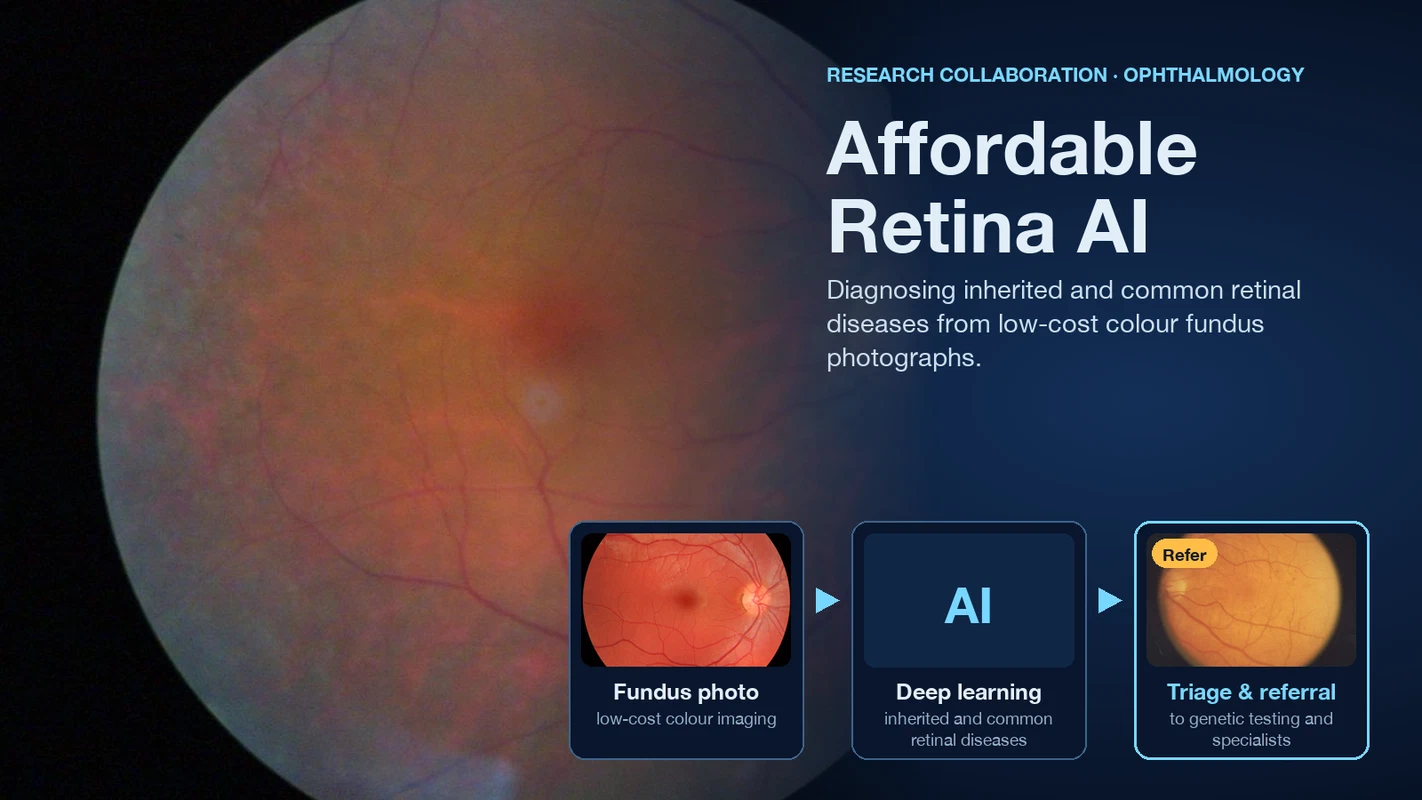
This international collaboration addresses the diagnosis of inherited retinal diseases (IRDs) and common retinal disorders using affordable color fundus photography, motivated by limited access to genetic testing and advanced imaging in low-resource settings.
Abstract
This international collaboration addresses the diagnosis of inherited retinal diseases (IRDs) and common retinal disorders using affordable color fundus photography, motivated by limited access to genetic testing and advanced imaging in low-resource settings. Together with partners in Germany and Lebanon, we curated and analyzed heterogeneous multi-center retinal imaging datasets combining in-house cohorts and public data, spanning diverse demographics and disease spectra. Methodologically, we developed lightweight deep learning models for multi-class retinal disease classification covering 21 retinal conditions, including 13 IRDs. The approach achieved strong diagnostic performance for prevalent IRDs (e.g., F1 score of 0.86 for retinitis pigmentosa) while remaining computationally efficient and interpretable.
Perspective
The collaboration established a sustainable international research link between ophthalmology groups in Germany and Lebanon and contributed to interdisciplinary student training. Ongoing work explores privacy-preserving and federated learning strategies to improve robustness and equitable deployment across populations further.
Partner institutions




Publications 2
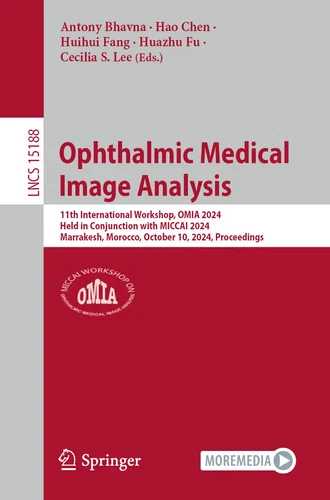
Affordable Deep Learning for Diagnosing Inherited and Common Retinal Diseases via Color Fundus Photography
Ophthalmic Medical Image Analysis — OMIA 2024 workshop @ MICCAI, Lecture Notes in Computer Science, 2024
Eine computergestützte automatische Polypencharakterisierung von Hyperplasten, Adenomen und Serratierten Adenomen im Kolorektum-Ergebnisse der CASSANDRA Studie
Viszeralmedizin 2021 (DGVS/DGAV) — Z Gastroenterol 2021; 59(08): e280, 2021