Utilising Artificial Intelligence in Cancer Imaging To Improve Patient Outcomes
Bonn-Melbourne Research Excellence Fund (2023-2024)
Abstract
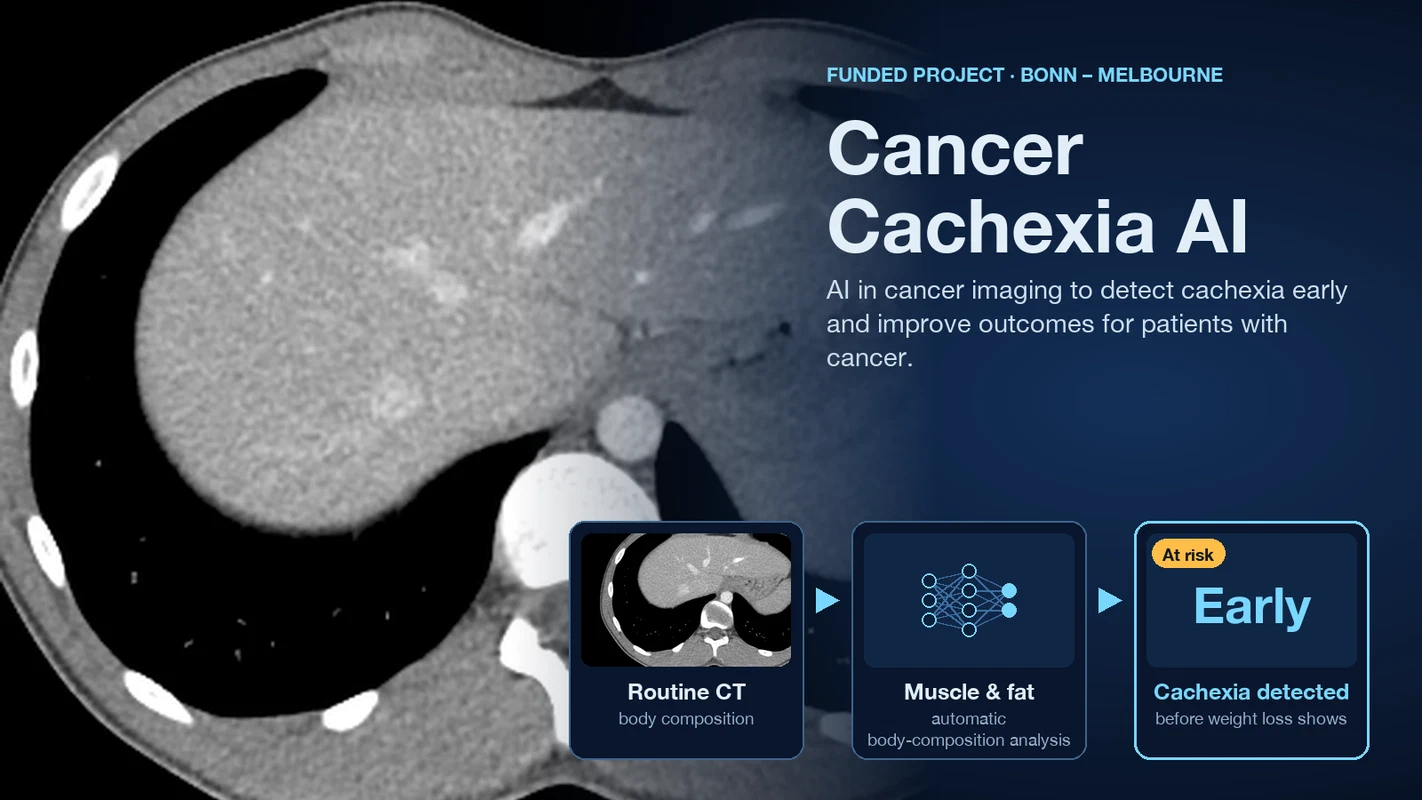
Cancer cachexia is a tumour-induced wasting disease that affects about 30% of all patients with cancer. This Bonn–Melbourne initiative, funded by the Bonn–Melbourne Research Excellence Fund of the University of Bonn (2023–2024), brings together clinical, computational (artificial intelligence) and laboratory researchers to improve outcomes for patients with cancer cachexia. The funding broadens digital research links between the two universities and prepares joint grant and conjoint PhD proposals.
Aims
- Develop non-invasive screening tools for cancer cachexia using AI-assisted analysis of routine imaging.
- Build a deeper understanding of the molecular processes of cancer cachexia using animal models and patient samples.
- Raise knowledge and awareness of cachexia through educational events for clinicians, patients and families on its diagnosis and treatment.
Team
The group combines expertise in radiology and image analysis (Hyun Soo Ko, Peter MacCallum Cancer Centre and University of Melbourne; Ulrike Attenberger, University Hospital Bonn), computational science and AI (Shadi Albarqouni, University Hospital Bonn and University of Bonn) and cancer biology and metabolism (Louise Cheng, Peter MacCallum Cancer Centre and University of Melbourne).
Partners:
- The Sir Peter MacCallum Department of Oncology, University of Melbourne and Peter MacCallum Cancer Centre, Australia
- Albarqouni Lab, University Hospital Bonn, Germany
Outcomes
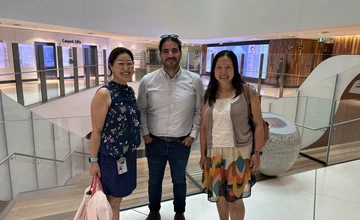
- Delegation from Bonn to Melbourne in March 2023 (Peter MacCallum news).
- Workshop in Bonn, 13 September 2023: Exploring the Intersection of Radiology Imaging and Immunology in Cancer Cachexia, with talks by Stefan D. Anker, Louise Cheng, Mauricio Berriel Diaz and Hyun Soo Ko.
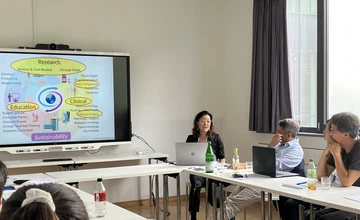
- Research visit to Melbourne, December 2024: meeting the Cheng and Ko labs at Peter MacCallum, and discussing the project’s closing report.
- Publications: a guide to setting up a multidisciplinary cancer cachexia clinic (Ko et al., J Cachexia Sarcopenia Muscle 2024), and work on lymph-node metastasis detection in pancreatic cancer with our PDAC-FL project.
- New collaborations in pancreatic cancer staging and multiparametric prostate MRI.
Perspective
The project established a lasting partnership between the University of Bonn and the University of Melbourne, providing a platform for continued joint research, doctoral training and future collaborative funding applications.
Partner institutions






Publications 3

Multi-center Collaboration for Improved Lymph Node Metastasis Detection in Pancreatic Ductal Adenocarcinoma
Helmholtz AI Conference 2025 (HAICON25, poster), Karlsruhe, 2025

Deep Learning for Lymph Node Metastasis Detection in Pancreatic Ductal Adenocarcinoma
Proceedings of the 2024 International Conference on Medical Imaging and Computer-Aided Diagnosis (MICAD 2024), Lecture Notes in Electrical Engineering, 2024

Enhancing oncological care: A guide to setting up a new multidisciplinary cancer cachexia clinic within a tertiary centre
Journal of Cachexia, Sarcopenia and Muscle, 2024