Block Course: AI in Medicine (AiM): Foundations, Methods, and Critical Perspectives
 Image created with assistance from DALL·E for the AiM Course at the University of Bonn.
Block Course: AI in Medicine (AiM)
- Lecturers: Prof. Dr. Shadi Albarqouni
- Tutors: Adea Nesturi, David Gaviria, Jiajun Zeng, Malek Al-Abed, Elodie Germani, Aditya Rastogi
- Module: CM1659
- Credits: 2 SWS
- Programme: PhD Candidates at BIGC CPS and NeuroScience
- Language: English
- Format: Block Course (2 SWS)
- Time: Tuesday to Thursday, 14-16 April 2026, 09:00 – 17:00
- Location: UKB, Venusberg-Campus 1, building C66, 1st floor, seminar room 101
Description
This block course offers an intensive introduction to artificial intelligence in medicine, with a focus on modern deep learning methods for biomedical and clinical applications. Designed as an interdisciplinary format, the course combines concept-driven lectures with interactive labs, allowing students to engage both with the theoretical foundations of AI and with practical challenges in medical data analysis.
The course is structured around a series of core topics that are central to contemporary AI in medicine. It begins with an introduction to deep learning, providing the conceptual basis for understanding neural networks and their role in medical applications. Building on this foundation, students are introduced to key tasks such as detection and classification, as well as segmentation, which are essential in areas such as diagnostic imaging, image-guided analysis, and automated clinical decision support. The course then expands to quality control in AI systems, with a particular emphasis on uncertainty estimation and interpretability, highlighting how trustworthy and transparent models can be developed and assessed. Further sessions address bias and causality, encouraging students to critically examine fairness, generalizability, and the difference between correlation-driven prediction and clinically meaningful reasoning. Finally, the course introduces vision-language models and their emerging role in connecting medical images, clinical text, and multimodal reasoning.
Each lecture is followed by an interactive lab in which students apply, explore, and critically reflect on the methods discussed. These labs are designed to deepen understanding through hands-on experimentation, collaborative problem-solving, and discussion of real-world medical use cases. In this way, the course not only introduces students to the technical building blocks of AI in medicine but also emphasizes the broader methodological and ethical questions that arise when such systems are developed for healthcare.
By the end of the course, students will have gained a structured overview of important AI methods in medicine, an understanding of their main areas of application, and a critical perspective on their limitations, risks, and clinical potential.
Learning Goals
Technical Skills
- Understand and critically appraise current research in AI in Medicine.
- Deepen expertise in medical image segmentation, registration, classification, uncertainty quantification, and bias/causality.
Topics and Focus Areas
Seminar topics are drawn from recent publications in top-tier venues and may include:
- Deep Learning Architectures (U-Nets, GANs, Vision Transformers)
- Segmentation & Classification (e.g., anatomical structure delineation, lesion detection)
- Uncertainty Quantification & Bias (Bayesian learning, causal inference, dataset shift)
🗓 Block Course Schedule (14-16 April 2026)
| Date | Time | Topic | Description |
|---|---|---|---|
| Tuesday, April 14 | 09:00 – 09:30 | Intro | |
| 09:30 – 10:30 | Lecture: Detection and Classification | Introduction to SoTA algorithms for Detection and Classification | |
| 11:00 – 12:30 | Lecture: Quality Control: Interpretbility | Introduction to SoTA Interpretability algorithms | |
| 14:00 – 17:00 | Lab: Detection and Classification | Introduction to SoTA algorithms for Detection and Classification | |
| Wednesday, April 15 | 09:00 – 10:30 | Lecture: Segmentation | Introduction to deep learning concepts specific to medical imaging. |
| 11:00 – 12:30 | Lecture: Quality Control: Uncertiantity | Introduction to uncertainty and quantification methods | |
| 14:00 – 17:00 | Lab: Segmentation and Interpretbility | Introduction to SoTA algorithms for Segmentation and Interpretability | |
| Thursday, April 16 | 09:00 – 10:30 | Lecture: Bias and Causality | Introduction to Bias and Causality in Medical Imaging |
| 11:00 – 12:30 | Lecture: Vision-Language Models | Introduction to Vision-Language Models | |
| 14:00 – 17:00 | Lab: Segmentation (Cont.) | Free time to complete the labs. |
Recommended Prerequisites
At least one of the following:
- Familiarity with fundamental medical imaging techniques and an interest in AI applications.
- Understanding of medical diagnostics and clinical data interpretation.
- A solid background in Python programming, linear algebra, probability, and numerical algorithms is recommended.
References and Resources
- [1] Litjens, Geert, et al. “A survey on deep learning in medical image analysis.” Medical image analysis 42 (2017): 60-88.
- [2] Shen, Dinggang, Guorong Wu, and Heung-Il Suk. “Deep learning in medical image analysis.” Annual review of biomedical engineering 19.1 (2017): 221-248.
- [3] Chen, Xuxin, et al. “Recent advances and clinical applications of deep learning in medical image analysis.” Medical image analysis 79 (2022): 102444.
- [4] Tajbakhsh, Nima, et al. “Embracing imperfect datasets: A review of deep learning solutions for medical image segmentation.” Medical image analysis 63 (2020):101693.
- [5] Wang, Ge, Jong Chul Ye, and Bruno De Man. “Deep learning for tomographic image reconstruction.” Nature machine intelligence 2.12 (2020): 737-748.
Registration
Registration takes place via BIGS CPS Portal or by contacting Prof. Dr. Shadi Albarqouni.
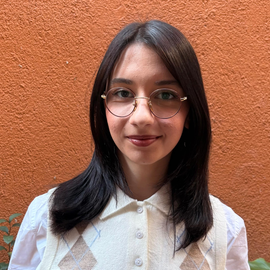
Adea Nesturi
PhD Candidate
Adea is currently a PhD candidate under the supervision of Prof. Dr. Shadi Albarqouni. She earned her master’s degree in Health Data Science from the University of St Andrews, Scotland, in 2024, where her research focused on the application of deep learning techniques for cancer detection. During her master’s program, she also contributed to the BraTS 2021 challenge, working on the segmentation of brain tumors (gliomas), which provided her with valuable experience in medical image analysis and collaborative research in international competitions.Adea’s research interests are centered on harnessing the power of deep learning to solve real-world medical challenges. She is particularly passionate about developing innovative technologies and AI-driven solutions that can directly improve patient care, enhance diagnostic accuracy, and optimize healthcare outcomes. Through her work at the Albarqouni Lab, she aims to bridge the gap between cutting-edge computational methods and practical applications in clinical settings, advancing the field of medical AI while addressing critical healthcare needs.
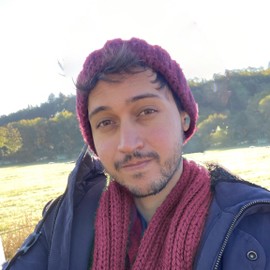
David D. Gaviria
PhD Candidate
David is currently a PhD candidate supervised by Prof. Dr. Shadi Albarqouni. He earned his master’s degree in AI from FIB, which is a joint program of UPC, UB, and URV. In 2019, he achieved the top spot in the SIIM-ISIC competition for skin lesion classification and has published his work at VISAPP 2023. David has a keen interest in utilizing technology for the betterment of society and intends to make contributions to AI in the field of medicine through his work at Albarqouni Lab.
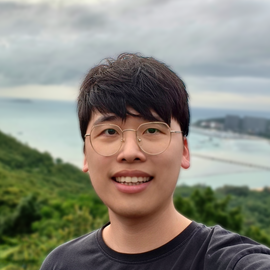
Jiajun Zeng
PhD Candidate
Jiajun Zeng is a PhD candidate at the University of Bonn, supervised by Prof. Shadi Albarqouni. He holds an MSc in Biomedical Engineering from Shenzhen University. During his master’s studies, he focused on AI for ultrasound image computing under the supervision of Assoc. Prof. Ruobing Huang and Prof. Dong Ni. His research interests span AI for healthcare, particularly in enhancing radiologists’ workflows through anatomical structure segmentation, disease diagnosis, and treatment support — with a focus on scenarios involving limited annotations and scarce computational resources. Currently, he is exploring efficient vision-language models and multimodal large language models for applications in the healthcare domain.
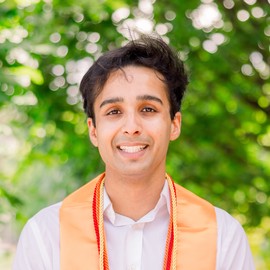
Pranav Kirti
Visiting Researcher & Fulbright Scholar
Pranav is a visiting researcher from the USA on a Fulbright Study/Research scholarship. He recently earned his bachelor’s degree in Data Science from Washington University in St. Louis, and he hopes to pursue a career in academic medicine. His project is titled Multimodal, Explainable Deep Learning for Rapid and Affordable Diagnosis of Retinal Diseases in LMICs.
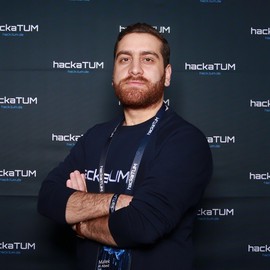
Malek Al Abed
Research Associate
Malek is a Research Associate at the University Hospital Bonn under the supervision of Prof. Dr. Shadi Albarqouni. He holds an M.Sc. in Biomedical Computing from TU Munich and completed his masters thesis at the University Hospital Bonn and TU Munich under the same supervision. His master’s thesis focused on image quality transfer for ultra-low-field MRI, with particular emphasis on the Hyperfine SWOOP system. Previously, he completed his undergraduate studies in Electrical Engineering at Kuwait University and undertook a research internship at Sony Stuttgart as a deep learning researcher, where he worked on audio recognition and human avatar technologies. Currently, his research focuses on the use of medical imaging in radiation therapy (iMRT and VMAT), particularly for dose optimization and personalized treatment planning. In addition, he works on developing an AI service and its corresponding API as part of the OMI protocol.
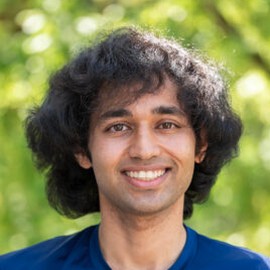
Postdoctoral researcher at the Department of Neuroradiology, Universitätsklinikum Bonn, Bonn, Germany
Dr. Aditya Rastogi is a postdoctoral researcher in the Department of Neuroradiology at Universitätsklinikum Bonn, where he works with Prof. Philipp Vollmuth and leads AI research within the Division of Computational Radiology and Clinical AI. His research focuses on developing advanced computational methods for medical image reconstruction, solving inverse problems, and integrating multi-modal neuroimaging. His current research interests lie in designing AI algorithms for ultra-low-field MRI and MRI scan-time reduction with a focus on generative modelling and human-in-the-loop optimisation. He earned his M.Tech and Ph.D. from the Indian Institute of Science (IISc), Bangalore, under the supervision of Prof. Phaneendra Yalavarthy, with a specialisation in computational medical imaging. During his doctoral studies, he was awarded the prestigious Prime Minister’s Research Fellowship (PMRF) by the Government of India in recognition of his research potential. Prior to joining Universitätsklinikum Bonn, he held a postdoctoral position at Universitätsklinikum Heidelberg. He is also engaged in mentoring graduate students and contributing to open-source initiatives in medical AI.
Elodie Germani
Postdoctoral Researcher
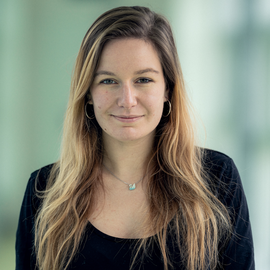
Elodie Germani works with Prof. Shadi Albarqouni as a postdoctoral researcher. She did her PhD at the University of Rennes, under the supervision of Dr. Camille Maumet and Prof. Elisa Fromont. After four years of medicine school at the University of Versailles, she took a shift in her career and started a Master’s degree in bioinformatics. Her research focuses on exploring, modelling and building solutions to take into account the variability of data in medical imaging, particularly using deep representation learning. During her PhD, her goal was to facilitate the re-use of data shared on public databases by taking into account the different sources of variability. In the future, she would like to focus more in the use of real-world data and on the robustness of machine learning models to dataset shifts and privacy attacks.