Our Lab at MICCAI 2026 in Strasbourg
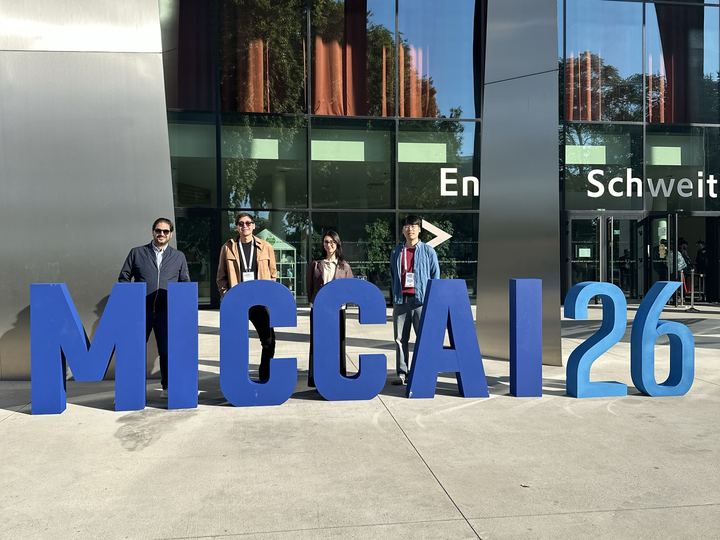
Our lab was at MICCAI 2026 in Strasbourg, France! This year, we contributed across research, workshops, and the broader MICCAI Society. It was great to see these efforts come together, from developing new methods to creating spaces for discussion, collaboration, and exchange.
Papers at MICCAI
Our lab had two papers accepted at the main conference:
-
PromptGate — Adea Nesturi, David Dueñas Gaviria, Jiajun Zeng, and Shadi Albarqouni
Adea Nesturi and David Dueñas Gaviria presented the work as poster W-AM-192. The paper introduces PromptGate, a vision-language gating framework that filters out-of-distribution samples before active learning. This helps reduce unnecessary annotation and improves the quality of selected medical images while preserving patient privacy across institutions.
-
K-MaT — Jiajun Zeng and Shadi Albarqouni
Jiajun Zeng presented K-MaT as poster W-AM-193. The work studies high-to-low generalization in medical imaging, transferring knowledge from high-end to low-end modalities without access to low-end labels. These posters attracted considerable interest and led to many engaging discussions with researchers at the conference.
Co-organized workshops
We also co-organized two workshops:
- SAFER (September 27), with Yasmeen George, Dwarikanath Mahapatra, Imran Razzak, among others.
- DeCaF (October 1), with Holger R. Roth, Spyridon Bakas, Xiaoxiao Li, Yasmeen George, Meirui Jiang, and others.
Workshop Satellite Event
In addition, Prof. Shadi Albarqouni served as one of the Workshop Chairs of MICCAI 2026, overseeing the workshop satellite events that brought together researchers and organizers from across the community.
Overall, it was a great week for the group: reconnecting with familiar faces, meeting new people, and having many interesting conversations throughout the conference. We look forward to the next one!
David D. Gaviria
PhD Candidate
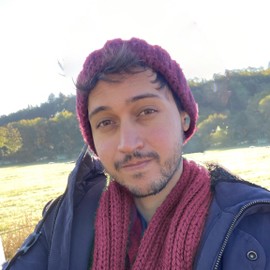
David is currently a PhD candidate supervised by Prof. Dr. Shadi Albarqouni. He earned his master’s degree in AI from FIB, which is a joint program of UPC, UB, and URV. In 2019, he achieved the top spot in the SIIM-ISIC competition for skin lesion classification and has published his work at VISAPP 2023. David has a keen interest in utilizing technology for the betterment of society and intends to make contributions to AI in the field of medicine through his work at Albarqouni Lab.
Adea Nesturi
PhD Candidate
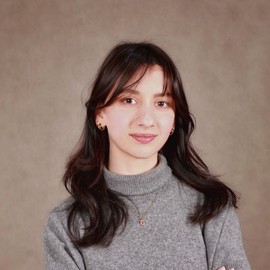
Adea is currently a PhD candidate under the supervision of Prof. Dr. Shadi Albarqouni. She earned her master’s degree in Health Data Science from the University of St Andrews, Scotland, in 2024, where her research focused on the application of deep learning techniques for cancer detection. During her master’s program, she also contributed to the BraTS 2021 challenge, working on the segmentation of brain tumors (gliomas), which provided her with valuable experience in medical image analysis and collaborative research in international competitions.Adea’s research interests are centered on harnessing the power of deep learning to solve real-world medical challenges. She is particularly passionate about developing innovative technologies and AI-driven solutions that can directly improve patient care, enhance diagnostic accuracy, and optimize healthcare outcomes. Through her work at the Albarqouni Lab, she aims to bridge the gap between cutting-edge computational methods and practical applications in clinical settings, advancing the field of medical AI while addressing critical healthcare needs.
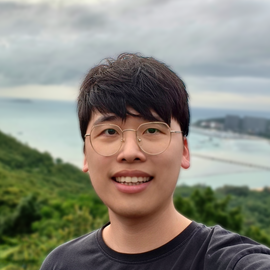
Jiajun Zeng
PhD Candidate
Jiajun Zeng is a PhD candidate at the University of Bonn, supervised by Prof. Shadi Albarqouni. He holds an MSc in Biomedical Engineering from Shenzhen University. During his master’s studies, he focused on AI for ultrasound image computing under the supervision of Assoc. Prof. Ruobing Huang and Prof. Dong Ni. His research interests span AI for healthcare, particularly in enhancing radiologists’ workflows through anatomical structure segmentation, disease diagnosis, and treatment support — with a focus on scenarios involving limited annotations and scarce computational resources. Currently, he is exploring efficient vision-language models and multimodal large language models for applications in the healthcare domain.